
He tree tomato It is a fruit-bearing plant of South American origin whose accepted scientific name is Solanum betaceum. It belongs to the nightshade family, the same family as the common tomato, eggplant, pepper, and potato. It is cultivated mainly for its edible, oval-shaped fruit with a distinctive flavor.
Despite its name, It’s not a conventional tomato that grows on a tomato plant.. It is a shrub or small tree with a branching habit, large leaves, and fruit that hangs from long stalks. It is also known as tamarillo, Andean tomato, mountain tomato, wild tomato and Quito tomatodepending on the region.
What is a tree tomato?
The tree tomato is a perennial species of the family Solanaceae, scientifically called Solanum betaceum Cav.. Kew currently recognizes it as an accepted species of the genus Solanumalthough for a long time botanical names such as Cyphomandra betacea.
Its area of origin is located in Tropical Americaespecially in the Andean region. It is currently cultivated in numerous tropical and subtropical countries and has also been introduced to various regions of the world. Colombia, Ecuador, Peru, and other Andean territories have played a prominent role in its cultivation as a fruit crop.
The common name may be misleading, but it has a simple explanation: Its fruits visually resemble tomatoesalthough the plant exhibits a completely different growth pattern and belongs to a different species than the usual cultivated tomato.
What does a tree tomato plant look like?
The tree tomato develops a shrubby or small tree formwith stems that branch out and form a relatively open crown. Depending on environmental conditions and cultivation methods, it can reach several meters in height. Kew records botanical descriptions that place some specimens up to approximately 6-7 meters.
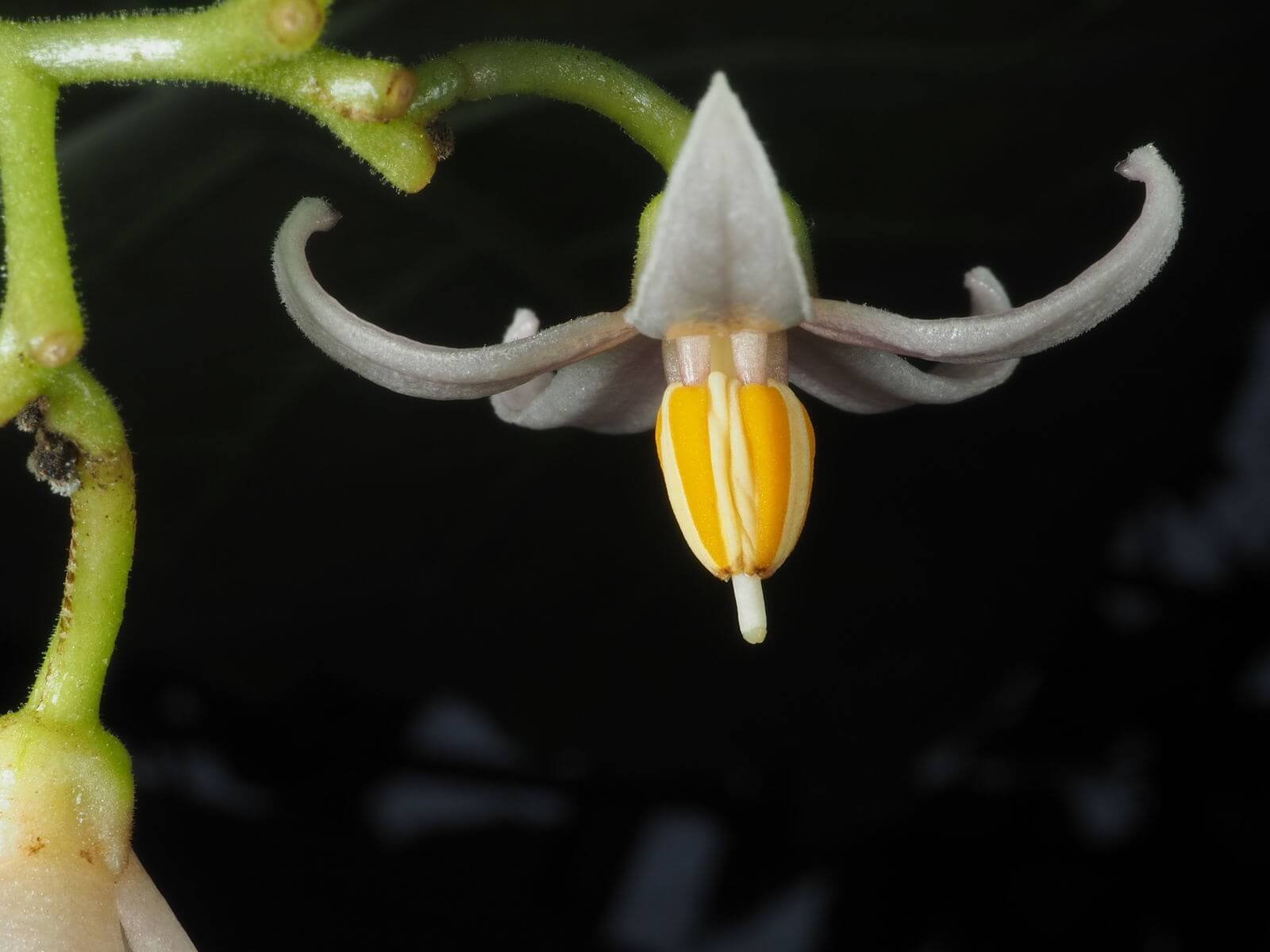
Its leaves are large, green, and relatively smooth in appearance, while the flowers appear grouped in inflorescences. The flowers have a structure typical of many nightshade families, with five petals and clearly visible reproductive organs. After flowering, the fruits form, hanging in clusters on peduncles.
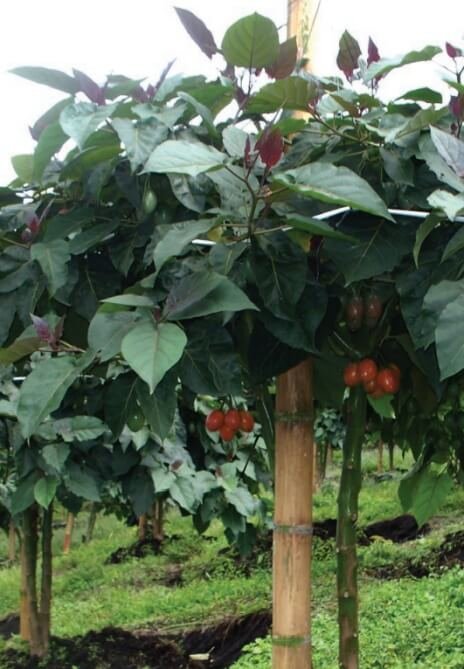
One very striking feature is that The plant can produce fruit while continuing to develop leaves and new branches.Therefore, under favorable conditions, it maintains a prolonged production. Its behavior and productivity depend, among other factors, on the climate, the variety, management, and the condition of the plant.
What does the fruit of the tree tomato look like?
The fruit is a fleshy berry, oval or elongated in shapeThey are usually several centimeters long. Their color changes depending on the variety and stage of ripeness, and can be red, orange, or yellowish.
The pulp contains numerous small seeds and has a flavor sweet, sour and aromaticThe flavors can vary in intensity depending on the variety and ripeness. The skin is usually firmer and more bitter than the flesh, so in some recipes it is removed before eating.
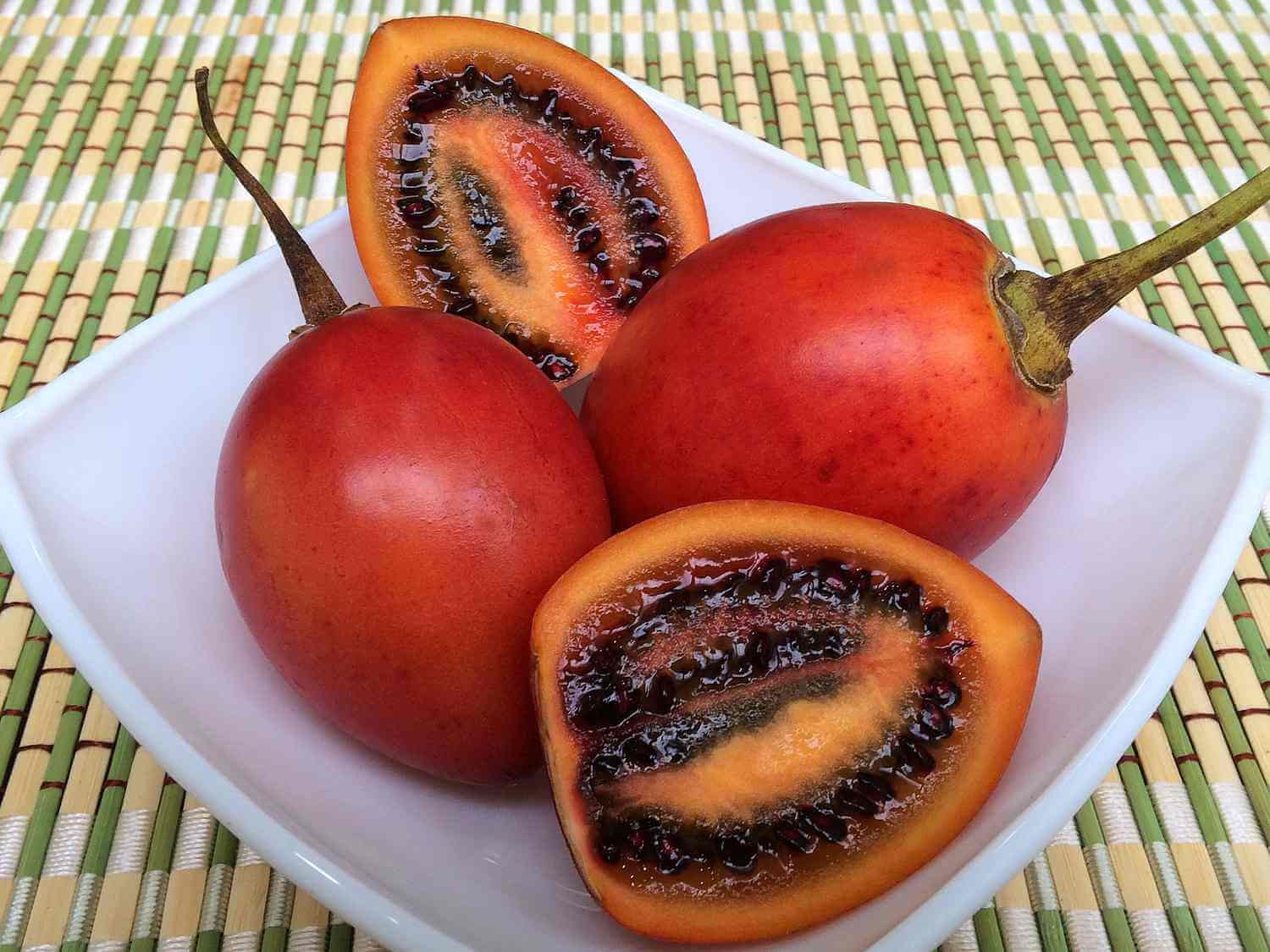
Tree tomatoes can be eaten fresh or used in various culinary preparations.. Its pulp is used in juices, sauces, jams, desserts and other preparations.especially in countries where this fruit is part of the traditional cuisine.
Where are tree tomatoes grown?
The tree tomato is closely related to climate zones temperate, subtropical and tropical regions of the Andean. Kew notes that several South American countries, including Peru, Ecuador, Colombia, and Bolivia, are part of its native distribution, while the species is currently also cultivated outside its original area.
In Colombia, for example, the botanical catalog of the National University records its cultivation between approximately 1,000 and 3,000 meters altitudeespecially in the Andean region.
Its presence in other countries demonstrates its ability to adapt to different environments as long as it finds suitable temperature, humidity, and soil conditions. However, It should not be considered a species native to any climate.especially when there are frosts or extreme temperatures.
What is the tree tomato used for?
The main use of the tree tomato is food. Its fruit is eaten fresh and is also used to make drinks, sauces, preserves, jams, and sweet or savory dishes. In various regions, it is part of the daily diet and traditional recipes.
It is also cultivated as a fruit tree in orchards and gardens in areas where the climate allows its growth. Its ornamental appearance, with large leaves, flowers and brightly colored hanging fruits, it can make it interesting from both a productive and decorative point of view.
Is a tree tomato a tomato?
No. Although it shares a common name and belongs to the same botanical family as the tomato, they are different species. The common tomato belongs to Solanum lycopersicum, while the tree tomato corresponds to Solanum betaceum. Both belong to the Solanaceae family, but they have distinct morphological and growth characteristics.
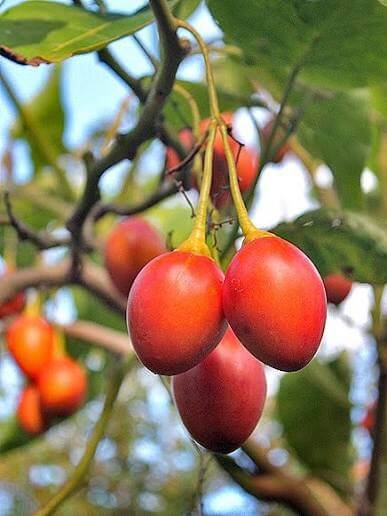
The common tomato is normally grown as a herbaceous plant with a managed growing cycle depending on the variety, while the tree tomato develops an evergreen shrub or small tree that produces fruit for several seasons when conditions are right.
Tree tomato and tamarillo
Tamarillo is one of the best-known names for the tree tomatoespecially in commercial and horticultural contexts. It is not a different species, but rather another common name for Solanum betaceum. Kew lists “tamarillo” and “tree tomato” among its common names.
The term tamarillo has spread internationally and frequently appears in the marketing of the fruit. In Spanish, however, tree tomato It remains one of the most widely used traditional names in Latin America.
In summary
He tree tomato (Solanum betaceum) It is a shrub or small fruit tree of the nightshade family, native to tropical America and especially associated with the Andean region. It produces oval, fleshy fruits of varying colors, with a flavor that is both sweet and acidic.
Its main interest is as food, although it can also be cultivated as a fruit and ornamental plant.. It’s not the same tomato that is usually grown in gardens.but a distinct species that has acquired great importance in different regions of the world.
Sources consulted:
National University of ColombiaBotanical information compiled in Plants of the World Online on distribution, common names and morphology of Solanum betaceum.