Chickpea plant
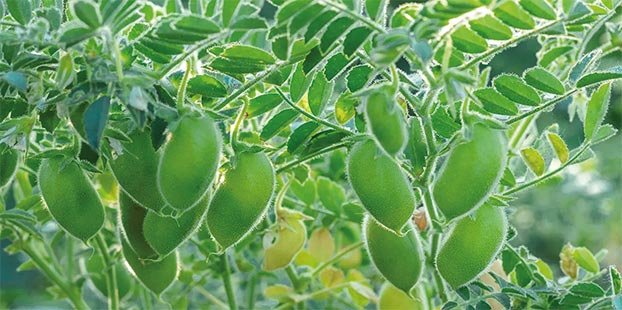
The chickpea plant (Cicer arietinum) It is a low-growing annual herb with branched, hairy stems, compound leaves, usually solitary flowers, and small, hairy pods. The chickpeas we eat are the seeds that develop inside these pods. Depending on the variety and growing conditions, the plant can produce flowers of varying sizes and colors.
It belongs to the family of the legumes or Fabaceae and is cultivated mainly for its seeds, the well-known chickpeas.
Unlike other climbing legumes, Chickpeas don’t need to be tangled in supports.. Its growth is erect or slightly extended and, depending on the variety and conditions, it can reach approximately between 20 and 100 cm in height.
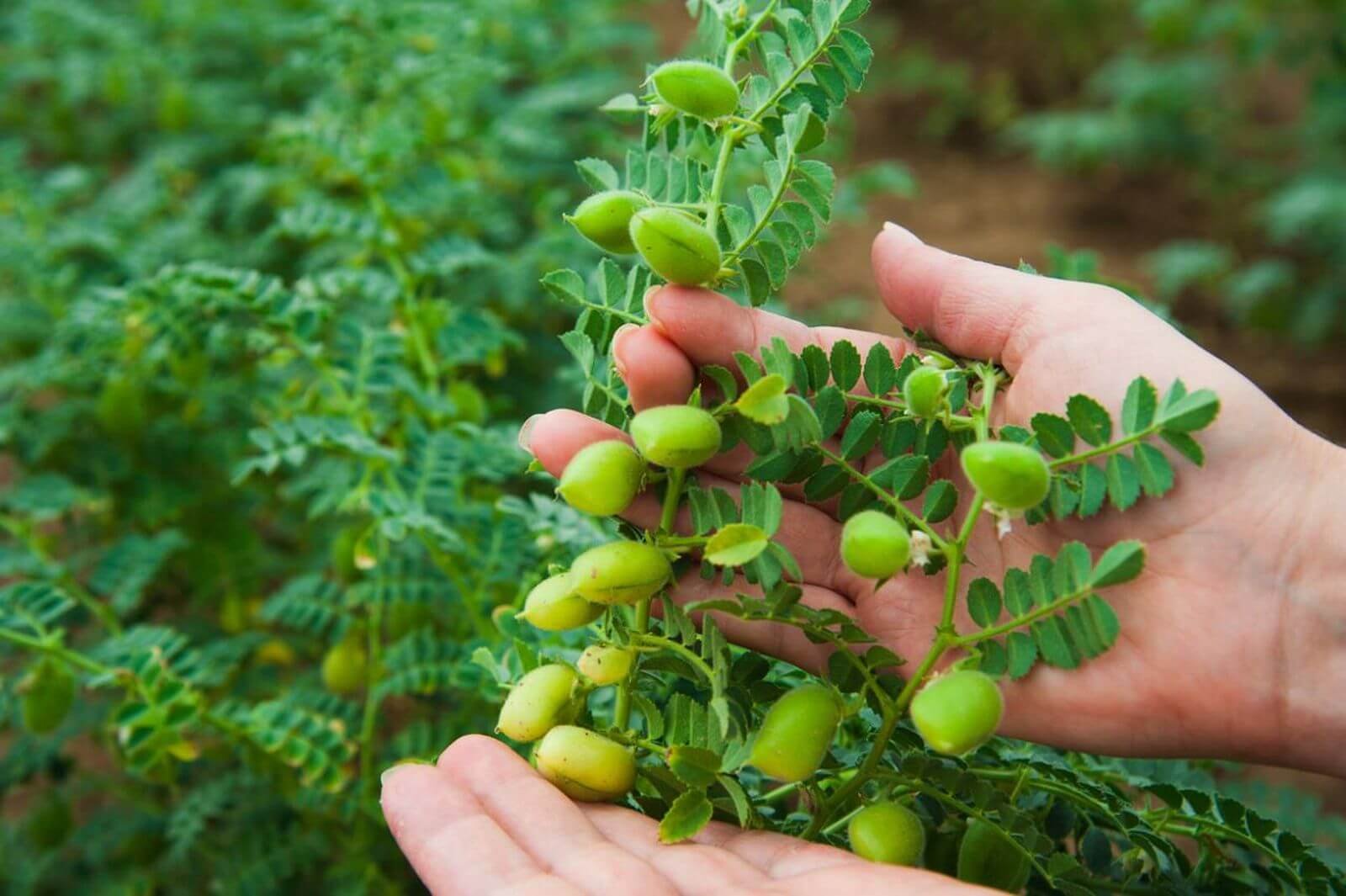
Table of Contents
- Technical data sheet on chickpeas
- What is the name of the chickpea plant?
- What does the chickpea plant look like?
- What does the chickpea fruit look like?
- How to grow chickpeas step by step?
- What does a dried chickpea plant look like?
- Is it possible to grow a chickpea plant in a pot?
- Common pests and problems of chickpeas
- How to recognize a chickpea plant
- Frequently asked questions about the chickpea plant
Technical data sheet on chickpeas
| Feature | Detail |
|---|---|
| Scientific name | Cicer arietinum |
| Common name | Chickpea, chickpea pot |
| Family | Fabaceae (legumes) |
| Life cycle | Annual |
| Height | 20–100 cm |
| Origin | Southeast Turkey / Fertile Crescent |
| Type of fruit | Small, inflated pod (legume) |
| Seeds per pod | 1–2 (occasionally up to 4) |
| Exposure | Full sun |
| Irrigation | Moderate, tolerates drought |
| Cycle until harvest | Approximately 90–120 days |
What is the name of the chickpea plant?
The chickpea plant is called chickpea, chickpea pot or Cicer arietinum. The scientific name identifies the cultivated species of this legume, while garbanzo is the most widespread common name in Spanish.
It is a annual plantTherefore, it completes its cycle from germination to seed formation and subsequent plant desiccation in a single season. Its cultivation is widespread in Mediterranean, subtropical, and temperate regions.
What does the chickpea plant look like?
The plant presents thin, branched stems covered with small glandular hairswhich can give it a slightly rough or sticky feel. Its growth habit is usually compact, so visually it differs from legumes such as beans or peas, which can develop climbing stems.
The leaves are made up of several pairs of small toothed leafletsusually between five and seven pairs. This compound foliage gives the plant a light and quite branched appearance, especially when it reaches its maximum development.
Flowering chickpea plant
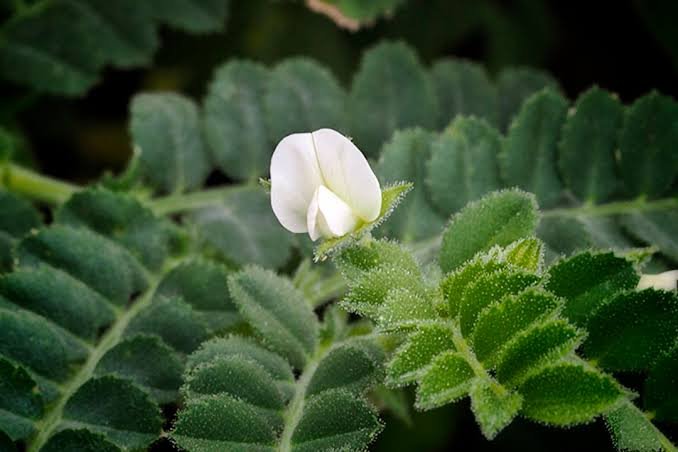
The Chickpea flowers appear singlyThey are typically found in the leaf axils. These flowers are characteristic of legumes, with a structure similar to that of other species in the Fabaceae family. Their color can be white, pink, bluish or violetdepending on the variety cultivated.
The flower is small, but easily recognizable when viewed up close. After flowering, the legume containing the seeds begins to develop. Therefore, The chickpea flower is an intermediate phase between vegetative growth and fruit formation.
What does the chickpea fruit look like?
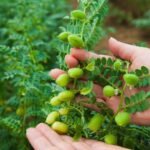
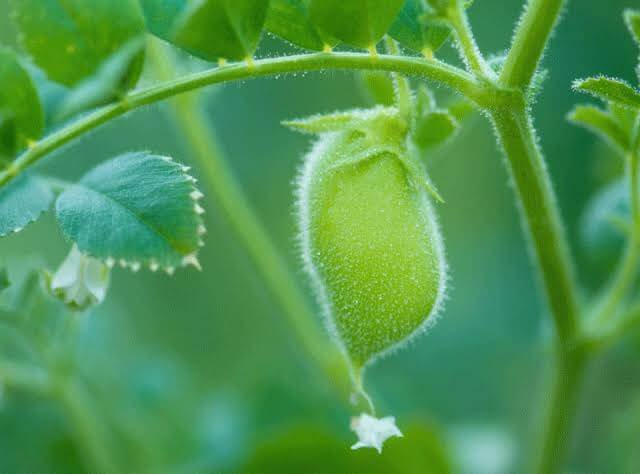
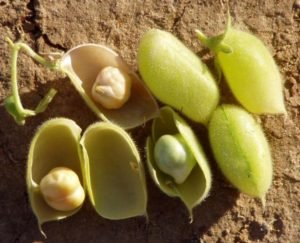
The fruit of this plant is a small rounded and inflated podcovered with glandular hairs. Inside it usually contains one or two seeds, although certain botanical descriptions occasionally include up to four.
The chickpeas that we know as food are precisely the seeds contained within these pods. Their size, color, and surface vary depending on the variety. Kabuli varieties typically produce larger, smoother, and lighter-colored seeds, while desi varieties have smaller, usually darker or rougher seeds.
Differences between varieties: kabuli and desi
| Variety | Seed size | Color | Surface | Regular use |
|---|---|---|---|---|
| Kabuli | Big | Light (beige/cream) | Lisa | Direct consumption, stews, hummus |
| Desi | Small | Dark (brown/blackish) | Rough | Chickpea flour, dal, fodder |
Kabuli types are the most common in Western markets, while Desi types predominate in the Indian subcontinent and are also often used for making flour and animal feed.
How to grow chickpeas step by step?
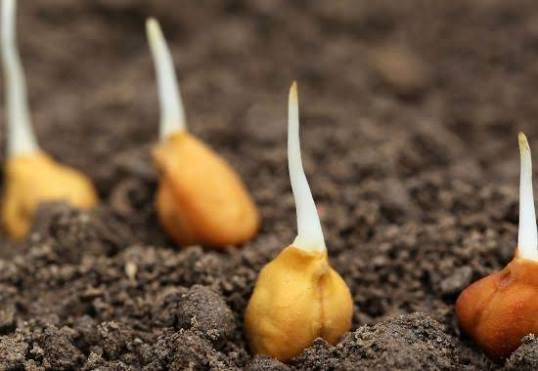
The chickpea is a relatively easy plant to grow if its basic needs for sun, watering and soil are respected.
- Planting seasonIt is generally sown in late winter or early spring, when the risk of severe frost has passed. In mild climates, it can also be sown in autumn.
- FloorIt prefers well-drained, loamy soils with a slightly alkaline or neutral pH. Excessive moisture promotes fungal root diseases.
- Planting depthThe seeds are placed at a depth of about 3-5 cm, leaving between 10 and 15 cm of separation between plants.
- Sun exposureIt needs full sun for vigorous growth and good flowering.
- IrrigationIt is a fairly drought-resistant plant once established. Water moderately, avoiding waterlogging, and reduce watering as the pods approach maturity.
- TemperatureIt thrives in temperate temperatures; extreme heat and excessive humidity during flowering can reduce production.
- HarvestThe pods are ready to harvest when they dry out and acquire a yellowish-brown hue, usually between 90 and 120 days after sowing.
What does a dried chickpea plant look like?
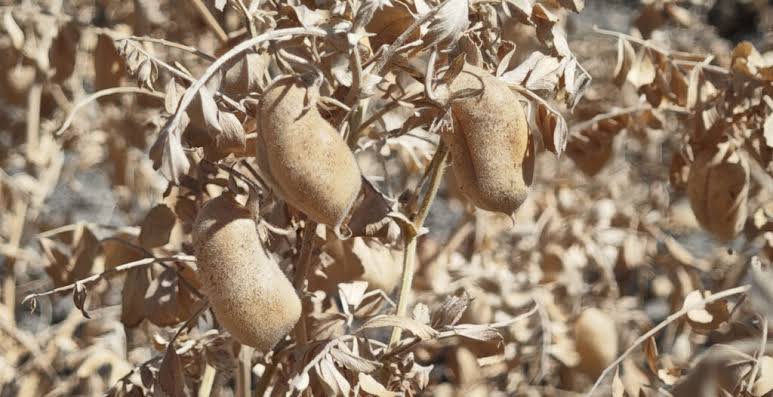
When its cycle ends, The chickpea plant gradually loses its green color and turns yellowish, brown, and dry.. The stems lose their flexibility and the leaves deteriorate until they dry out or fall off.
At this point, the pods have also lost much of their green color and the seeds have reached maturity. The dried plant is therefore the natural result of the end of the chickpea’s annual cycleand not necessarily a sign that the plant has suffered a problem.
Is it possible to grow a chickpea plant in a pot?
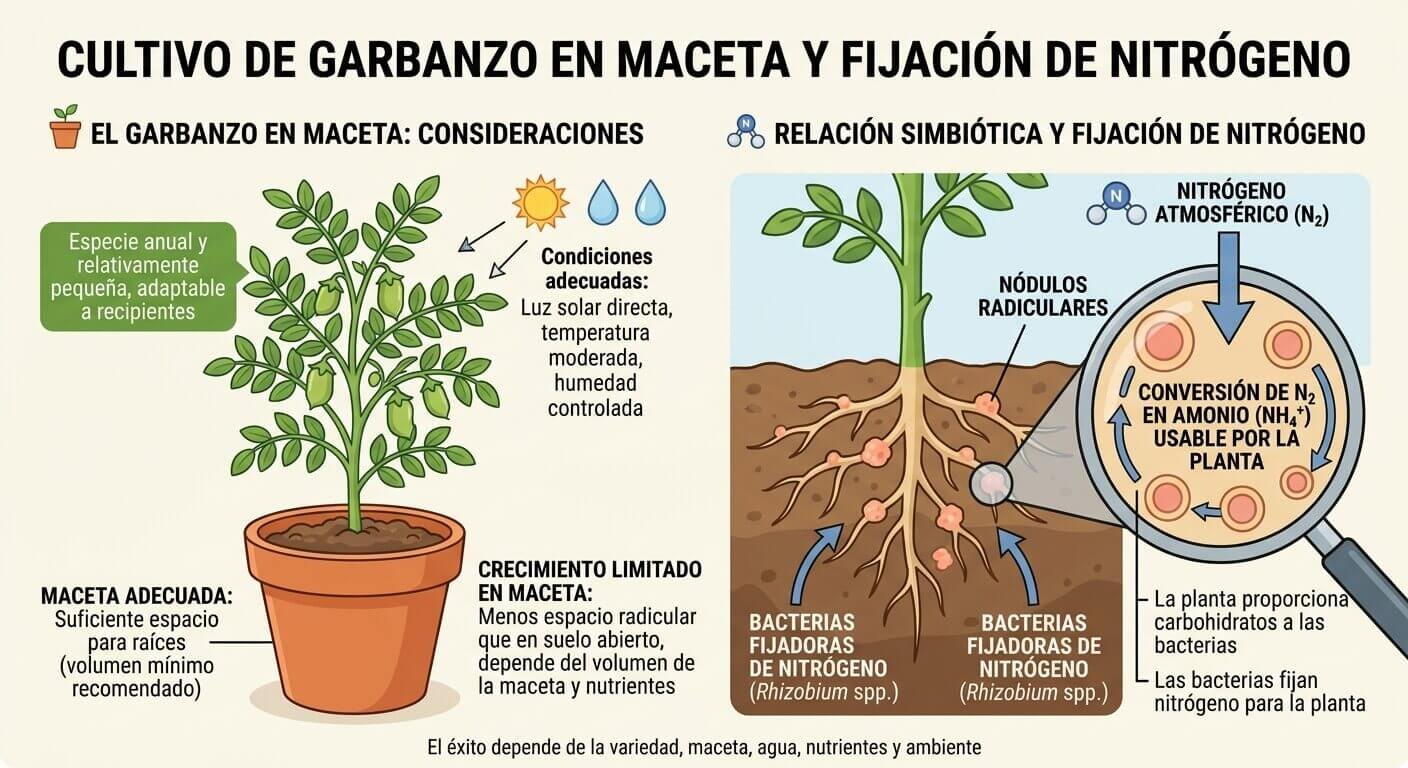
Yes, chickpeas can be grown in a potProvided the container allows sufficient space for root development and the plant receives adequate light, temperature, and humidity. Being an annual and relatively small species, it adapts better to a container than larger plants.
Even so, a potted plant will have less root and growth space than a soil-based planting. The final result will depend on the variety, the container volume, the availability of water and nutrients, and the environmental conditions.
The plant also establishes a symbiotic relationship with bacteria in its roots capable of fix atmospheric nitrogenforming root nodules, a typical characteristic of many legumes.
Some specific recommendations for growing in pots:
- minimum size: a pot at least 20-25 cm deep and in diameter, since the chickpea develops a taproot.
- Substratum: light mix with good drainage (universal substrate combined with perlite or sand).
- DrainageIt is essential that the pot has drainage holes, as waterlogging is one of the main causes of failure in container growing.
- Location: a sunny spot, such as a south-facing terrace or balcony.
Common pests and problems of chickpeas
Although it is a relatively hardy plant, it can be affected by some problems:
- Chickpea blight (Ascochyta rabiei): fungus that causes dark spots on stems, leaves and pods, especially under prolonged humid conditions.
- AphidIt can weaken the plant and promote the appearance of secondary fungi due to the honeydew it produces.
- WhiteflyIt affects mainly hot and dry climates.
- Root rot: associated with excessive irrigation or poorly drained soils.
Prevention mainly involves avoiding excess humidity, maintaining good air circulation between plants, and rotating crops from year to year.
Where do chickpeas come from?
The origin of cultivated chickpeas is related to southeastern Türkiye and the Fertile Crescent region. The cultivated species is not known as a wild plant, and is considered to have originated from the domestication of closely related wild species, especially Cicer reticulatum.
From its areas of origin, cultivation spread to other regions of Asia, Europe, and later to different parts of the world. Currently, chickpeas are widely cultivated in Mediterranean, subtropical, and warm temperate climates.
How to recognize a chickpea plant
To easily identify it, there are several characteristics that allow it to be distinguished from other legumes:
- It is an annual herbaceous plant of low stature.
- Presents branched and pubescent stems.
- Its leaves are divided into numerous small, toothed leaflets.
- Flowers usually appear solitary and they can be white or have pink, blue or purple tones.
- Produce small, rounded, hairy pods, which chickpeas contain.
Frequently asked questions about the chickpea plant
How long does it take for a chickpea to grow?
From planting to harvest, it usually takes between 90 and 120 days, depending on the variety and weather conditions.
Does the chickpea plant need a lot of sun?
Yes, it requires full sun exposure to develop properly and produce a good amount of pods.
Do chickpeas need a lot of water?
Not especially. It’s a drought-tolerant plant once established, and overwatering can encourage root diseases.
Is it possible to grow chickpeas at home year-round?
It depends on the climate. In temperate zones, it is recommended to sow in late winter or early spring; in very cold climates, it is not viable to grow it outdoors during the winter.
In short, the chickpea plant (Cicer arietinum) It is a small annual legume easily recognizable by its compact shape, compound leaves, solitary flowers, and distinctive pods. During maturation, it changes from a green, vegetative state to a completely dry one in which the seeds are fully formed.